






 Listen LIVE
 Hugh's Free Podcast
 Newsletters
Senator Ted Cruz (R-TX) On His New Book “Unwoke,” On Senator Tuberville’s “Holds,” And On The Explosion Of Anti-Semitism On University Campuses
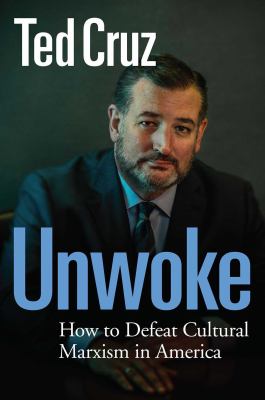
Senator Ted Cruz (R-TX) joined me this morning to discuss his new best-seller “Unwoke”:
Audio:
Transcript:
HH: I’m joined by United States Senator Ted Cruz. His brand-new book is Unwoke, and it’s fabulous. Unwoke is available at Amazon.com. Unwoke is in every bookstore. Unwoke may be in most of the country’s airports, although I don’t know, Senator. Do you think that you’re going to get past the censors at the airport-approved, state-run bookstores?
TC: You know, I’ve got to tell you, Hugh, airports tend to really dislike conservative books. You sometimes have to hunt a little bit harder for conservative books in airports. Boy, they don’t like them.
HH: Unwoke is really a fabulous read, and I made my outline. I read it last week. I made my outline during the Browns game yesterday. It kept getting longer, but I’m going to try and respect your time. It’s a book about cultural Marxism, but this is a moment of anti-Semitism, which is part of cultural Marxism. I want to play for you, Senator, a bit of video and audiotape that I received yesterday, actually Saturday night, from a good friend. I’ve had it corroborated by another person. This happened in Manhattan on Saturday afternoon. Play it for the Senator.
(Crowd chants) Kill the Jews. What do we want? Kill the Jews.
HH: Senator, that is a march of hundreds, if not thousands of people on New York Manhattan streets chanting kill the Jews or kill some Jews. It’s hard to tell. What do you think about that? And I know Chaplinsky, and you know, Chaplinsky, and we know that fighting words are a very narrow exception to the 1st Amendment. Do you think that fits in it?
TC: Well, as a legal matter, I don’t know if it does or not, but I’ll tell you, it’s tragic. I mean, it breaks your heart. And you know, after World War II, billions across the globe committed Never Again, that never again would we allow the kind of horrors that the world saw during the Holocaust, that never again would we allow the mass murder and genocide of Jews. And we are seeing an environment right now where as you just played, there are large numbers of people calling for exactly that. And I think we should take it deadly serious. And on that matter, on October 7th, we saw exactly the horrors that the Nazis carried out repeated by Hamas terrorists. And October 7th, tragically, is the largest single day mass murder of Jews since the Holocaust. And yet, for those filled with the evil hatred that you just played, and that we’re seeing in the halls of Congress, that we’re seeing in universities across the country, that we’re seeing in the streets of Europe, for those filled with that hate, it’s not nearly enough.
HH: Now Senator, in Unwoke, in practically every chapter, you talk about the long march of the cultural Marxists and the left through all of the institutions. But your book was written and to press before this invasion of Israel, and before our campuses became volcanos of anti-Semitism. On Thursday of last week, the Department of Education office of Civil Rights announced the opening of seven investigations, five of which are into anti-Semitism, two of which are into Islamophobia. I think that’s a gesture, and a very poorly-concealed one. They missed our alma mater at Harvard. They missed my law school alma mater at Michigan. They missed the University of California, San Diego. They missed NYU. Do you think the cultural Marxists are running the Department of Education office of Civil Rights?
TC: Of course, they are. And it is, this suffuses every major institution. The book, as you know, explains how the radical left seized every major institution in America. And the first chapter of the book is on the universities. And I call the universities the Wuhan lab of the woke virus, because it’s where it started. And we’re seeing it at universities all across the country. You know, among other schools they missed, they missed MIT where aggressive and violent anti-Israel and anti-Semitic protesters blocked Jewish students from going to class, physically prevented them from going to class. Jewish students at MIT are saying they are afraid to be at school, that they do not feel safe. And absurdly, the administration of MIT, they said they’re not going to respond by expelling the anti-Semitic protesters who are stopping other students from going to class. Why? Because if they did, they would lose their student visas and have to go back home. In other words, because they are foreigners, they’re not Americans who are violently threatening other students, this university is giving them a special status and saying please continue. It is truly absurd, and it is the most dramatic illustration of cultural Marxism you could imagine that is playing out right before our very eyes.
HH: You know, you detail in Unwoke how the universities have shifted from the time when you and your debate partner could go, and I’d love to talk about Slash, but I don’t want to keep you too long. He’s not your regular debate partner. But it’s a series of stories about how the American university has moved, and it’s gone so far over the edge now that I am amazed you were able to get through the Yale when you were out there advertising the Verdict w/Ted Cruz. I’m amazed you were able to speak, Senator. And that’s a great chapter, by the way. I’m glad you included the transcript.
TC: Well, look, it is, on the positive side, it is extraordinary. As you know, and as I talk about in the book, my podcast, Verdict w/Ted Cruz, we’ve taken it on the road. And we do it live on college campuses. And so we’ve been to lots of left-leaning campuses, and including the University of Wisconsin at Madison, including Yale University. And I tell the story about how we had between 600-700 students at Yale, a third of whom were left-leaning. And we had 90 minutes of Q & A that was substantive, that was civil, that was direct. And you know, the rule that I have at the podcast when you’re on campus is if you’ve got a hostile question, if you’ve got an antagonistic question, come to the front of the line. And left-leaning students questioned me, and I tried to respond with a smile, with a little bit of humor, but with substance. And the amazing thing is we had no outburst. No one screamed. I didn’t know what we were going to experience. We didn’t experience any of that, and I do think there is a hunger on college campuses to actually engage in substance. Students still want to learn, and it’s worth remembering even with these vicious anti-Semitic protests that this is a sliver of the students. This is not everyone. This is the extremes, but the sickness is when you have someone, look, it ought to be real simple. If you harass or threaten or violently assault another student, you ought to be expelled. And by the way, that’s true regardless if you’re harassing a Jewish student. You should be expelled. If you’re harassing a Christian student, you should be expelled. If you’re harassing a Muslim student, you should be expelled. No student has the right to harass or threaten another student. And the problem, and this goes right to the heart. You know, some of your listeners may be saying okay, what is cultural Marxism. What exactly does this mean? And this book, Unwoke, tries to explain that. Karl Marx laid out a worldview that the world is in constant conflict. And it’s a conflict between oppressors and victims. And he saw it in socioeconomic terms. So for Marx, the oppressors were the owners of capital. And the victims were the proletariat, the working men and women. And the solution that Marx advocated was the violent revolution of the proletariat against the oppressors. In this instance, the Marxists infiltrated the campus, and they now put the Marxist worldview on every attribute. They put it on race. They put it on gender. And the reason the leftists are embracing anti-Semitism is they have defined Jews as oppressors. And they have defined Palestinians as victims. And so the cultural Marxists cheer for, they celebrate the violent revolution of the so-called victims against the so-called oppressors. That’s the sickness that we see throughout our universities and throughout our institutions today.
HH: Now the great story that you tell, and I was unaware that you had done this, I followed the judge at Stanford very closely. There are never any consequences of seriousness. Now you point out that one administrator of Stanford has been put on administrative leave. But I am so glad you wrote the Texas Bar, because that’s exactly what needs to happen. Why don’t you tell people about the event, about the judge, and about what you did, because there have to be consequences for people who engage in what is absolutely a violation of 1st Amendment freedoms, and of most university policies.
TC: Well, sure, and I will say the book is designed not only to describe what has happened, how these institutions have been taken over, but even more importantly, the book is designed to lay out a practical battle plan for how we take them back. This book is optimistic. It’s hopeful. I believe we can and will take these institutions back. So concerning universities, I describe, as you just noted, what happened at Stanford Law School, where Judge Kyle Duncan, an excellent judge on the 5th Circuit Federal Court of Appeals, was invited to come give a speech. And that’s something that happens all the time. Judges give speeches at law schools. And he came there expecting to give a relatively dry speech on Constitutional Law, and he was greeted by a room full of angry, screaming, aggressive protesters who shouted him down, who did not allow him to speak, who stopped his speech. They were screaming obscenities. They were screaming epithets. They screamed at him, “I hope your children are raped.” It shut the entire event down. There were students there who wanted to listen to the judge. But their free speech rights to hear a speaker they wanted, those were not respected. And what happened as it proceeded is the university had an administrator, the associate dean for diversity, equity and inclusion arrived. And the judge, I guess somewhat naively, believed the dean would defend the free speech policies of Stanford. But instead, what happened was the dean sided with the mob and stood up and gave this written out lecture of the judge, that how dare he think he could speak at a law school. And the phrase she repeats multiple times is, “Is the juice worth the squeeze?” And she explained that the words he would utter were, they were actual violence to the students that their precious little ears could not hear them. It was disgraceful. Well, after that happened, I did two things. Number one, I wrote a letter to the president of Stanford and the dean of Stanford Law School.
HH: You know the dean from [Stanford] Law.
TC: I do. We went to law school together. She was a year behind me. We were both on the law review together. We were not close friends, but we were certainly cordial and knew each other. And I wrote them both and said this was disgraceful, and I called on the university to impose consequences. And much to my astonishment, Stanford did, they first put the dean, the associate dean who had behaved that way on leave without pay. And they ultimately terminated her. She was gone. They fired her. And it was a moment of rare clarity where there were consequences. But secondly, you know, it was too much. Stanford couldn’t quite bring itself to put real consequences on the students. They had what they called mandatory training on the 1st Amendment for students, which was something. That was not nothing, but they didn’t actually have real consequences that were a deterrent to bad behavior. So I wrote a letter to the Texas State Bar. And as you know, to be a member of the Bar, anyone must demonstrate character and fitness to be a member of the Bar. And if you behave, and you know this well, Hugh. If you behaved as those law students did in a courtroom, if you treated a judge by screaming and cursing, you would be held in contempt. You would be arrested, and you would be thrown in jail. Lawyers cannot treat judges the way those law students behaved. That is simply not consistent with being a member of the Bar. And I pointed out the State Bar that Stanford was allowing this, and I urged the State of Texas to impose additional safeguards to examine the graduates of Stanford. Well, the Chief Justice of the Texas Supreme Court, a man I know well, Nathan Hecht, wrote me back. And he said the Bar agreed with me, and that henceforth, the State Bar was going to apply additional standards to the graduates of both Stanford Law School and Yale Law School to inquire independently if they had participated in threatening or harassing speakers on campus. And if they have, that that conduct was not compatible with being a member of the Bar of the State of Texas. And they noted, well, unfortunately, the administrations there are not protecting free speech, so the State Bar is doing so. And those are real and meaningful consequences for those graduates. And I urged other, particularly red state Bars, although it should be any State Bars, to do similarly. And that’s one of the strategies. So throughout this book, I lay out three strategies – sunshine and light, imposing real and meaningful consequences, and then creating alternative organs of transmission of ideas, or having conservatives or libertarians take over and purchase existing organs of transmission of ideas. Those are the major strategies I focus on. This was 1 and 2. This was transparency and light, but it was also for the next student, law student thinking hey, maybe I should scream at this speaker and shut him down and harass them, if that law student knows wait a second, I don’t get to be a lawyer at the end of all this, that’s how you stop some of this. You change the cost-benefit analysis. You change the cost-benefit ledger.
HH: And you detail Judge Ho’s actions. I approve of that. But Senator, I know your time is limited, so I want to get to the end of the book. You cover Big Tech. You cover big media. I love the line about why are we talking about the internal politics of the New York Times in a book about cultural Marxism. People can read that. But at the end of the book, you’re focused on China. I don’t know if you saw the most recent presidential debate.
TC: I did.
HH: But I got three questions, and I asked three questions about China – our ship and the fleet opposing China, TikTok, and opioids. And the reason I did that is because I agree with you that “We need to use every tool we have, including presidential debates, to raise the alarm about China.” And I agree with you that, Page 291, “Getting Democrats to stand up to China is difficult.” Now I’m not going to put you on the spot for an answer, but I’d like to know how you approach your colleague, Senator Tuberville’s hold, with that in mind, because I would plead with the Senator, we cannot afford to not have our best people remaining in the military, advancing in the military. We can’t punish their families. We can’t send the message that the military is a second-class citizen. And even though you and I both know the Biden administration has broken the law, quite obviously, the people that the Senator is holding up have got nothing to do with this. Now you haven’t voted, yet, on the resolution. And I don’t want your vote right now. I just want to know how you’re approaching the issue, which will be debated in the Republican conference in a week and then will come to the floor not with a rules change, but with a standing resolution to advance the 450 holds that Senator Tuberville have. And I know your friend, Mike Lee, is in alliance with him, but I want to give you a chance to tell the audience how you’re approaching that.
TC: Well, let me address that. Let me make a broader comment first, but I’m going to get to your exact question, Hugh. But I just wanted to say on the debate, I thought you did a terrific job moderating the debate.
HH: Thank you.
TC: And look, I have watched a lot of presidential debates. I’ve participated in more than a few. And usually, I think the moderators do lousy jobs, because the moderators want it to be all about them. And you have, we’ve had some disgraceful performances of debate moderators. I actually thought all three of you did a terrific job.
HH: I agree.
TC: It may be the best moderated debate I’ve seen, including impressively, and I talked about this on my podcast, Verdict, when at the very beginning, Vivek slammed the three moderators, nobody responded or took the bait. And listen, it is, and many times appropriate to disagree vocally with the moderators when they’re being biased. But I didn’t think y’all were being biased.
HH: Let me add, Senator, he went directly at Kristen Welker, and she didn’t flinch, because it’s not about the moderators. He can say whatever he wants. We’re not there to respond.
TC: Look, and I thought she handled it very well. And what I talked about, as I said, listen, what he said was almost certainly a set piece. He’d come in and planned it. But it came across as inauthentic, because he did it with no provocation. It’s one thing when you have moderators who are being unfair, who are being biased, and it’s appropriate to respond. It’s another thing to start by saying you know, good evening, and punching people in the face. And the restraint y’all showed was significant. I also appreciate the foreign policy questions you asked. Those were important. And connecting, you asked about TikTok. TikTok is intimately connected to all of the issues we talked about.
HH: Yes.
TC: But in particular, the vicious anti-Semitism we’re seeing, TikTok, controlled by the Chinese Communist Party, is aggressively pushing pro-Hamas propaganda right now. And I’ll tell you, on today’s podcast, on Verdict w/Ted Cruz, we break down this horrible set of videos that are trending on TikTok of young people praising Osama bin Laden’s letter.
HH: Yes.
TC: And the CCP wants this to trend. And I point out, this is cultural Marxism. One of those young nitwits say well, with colonial settlers, that violence from those who were oppressed, should be justified. And that is exactly the garbage that is being poured into young people’s minds through universities, through K-12 education, through Big Tech, through entertainment. And it’s what we need to fight back on. Now you asked a substantive question about military promotions and Tommy Tuberville’s holds. Tommy is a good friend. He’s a terrific colleague. I like him. I respect him, and I work closely with him. And like you, like he, I am horrified at the Biden administration’s policy in defiance of federal law, paying for servicewomen to travel to receive abortions. They did that in response to the Dobbs decision. It is contrary to federal statute, and they did it because nothing matters more to this administration than virtue signaling. And they’re willing to break the law, and they’re willing to jeopardize military readiness, because politics for them is preeminent. Now that being said, I also agree with you that the men and women who are up for promotions, the one-stars, and the two-stars and three-stars and four-stars, it is not their fault. They are not the decision makers. They are not the ones who decided to do this. It is the political appointees at DOD who made this decision. And I do agree that this hold is having real and negative consequences on their lives, on their careers, and ultimately, on military readiness. I believe this issue will get resolved. I don’t think the right resolution is a rules change. But I can tell you we have had vigorous conversations within the Republican conference, vigorous understates just how energized they’ve been. I’ve had multiple conversations with Tommy, and I believe in relatively short order, this issue will get resolved, and we will find a course of action that allows the military promotions that need to happen to go forward, but that also allows Tommy to continue to fight, and fight valiantly for the unborn. I think you can do both, and I hope we do do both.
HH: Now Senator, I want to conclude by pointing out to my audience the reason they need to read Unwoke, particularly if they’re young, and maybe listen to the Verdict every time it comes out, is the answer you just gave. Not the specifics, which I’m actually very encouraged to hear. I hope the standing resolution gets passed, and I hope the conference moves these career military people without any more additional rhetoric about they’re being desk jockeys, etc. They’re Silver Star winners and amazing warriors. But the answer that you gave, and the way you demonstrate in Unwoke, is to hear the entire question and answer it respectfully and in numerous parts. That takes training. You did debate at Princeton. I love that part the most, because I didn’t want to do college debate, because sometimes, it got so crazy. I did always speech and debate in high school, and I want everyone to do it. But it’s a practice, right? It’s a skill set.
TC: Sure.
HH: And I think we’re losing that skill set on the right.
TC: Well, we don’t engage. We don’t listen. And I actually thought, what you just said there is the most important word, was listen. And by the way, this is true at Senate hearings as well. You know, when I’m questioning witnesses, you know, I’m not doing so for my own diversion. I’m doing so because I’ve got a job to do, which is representing 30 million Texans. And when I’m at a hearing. I try to ask the questions I believe Texans would want asked. And I try to cross-examine, and sometimes vigorous cross-examine witnesses, because I think Texans want to know the answer. But as you know, you do this for a living, Hugh. You’ve got guests on all the time. You can’t effectively cross-examine someone if you don’t listen to what they say. And too many senators on both sides of the aisle, both D and R, just have a series of questions written down on a paper, and they read question 1, they read question 2, they read question 3, and it doesn’t matter what the witness says. They move on to question 4. And you can’t do that effectively. What you’ve got to do is ask the question, listen to the answer, and then be willing to pivot and go where the answer takes you. And that requires active and aggressive listening. It’s the same skill you and I have both employed many times in oral arguments in court, whether you’re in district court or the Court of Appeals, or the U.S. Supreme Court. You can’t effectively answer a question unless you hear it, process it, and then take it in the direction that it needs to go.
HH: You’re very kind. I’ve only done one argument before one Circuit Court. That was the 9th Circuit, and I won. Stephen Reinhardt was on the panel, and I got his vote.
TC: Wow.
HH: So I consider that a big win. But I want to close with a phrase that your interlocutor at Yale used, because it’s now a trigger for me, and I say that jokingly. I want to create a space. And I hate that.
TC: Yes.
HH: It’s like the term 100%. I hate that term, but I want to create a space. Boy, is that a tattoo of a lefty. Do you agree with me, Senator?
TC: I do, and a safe space goes right against the heart of what a university is supposed to be. If I were to define a university, I would like to define it as an unsafe space. Now I don’t mean unsafe from threats and violence. That, there’s no place for. But unsafe for intellectual complacency, unsafe for simply resting in your ideas and not having them challenged. Look, you and I both went to schools where many of the professors, most of the professors disagreed with us. That was great.
HH: Yup.
TC: That is an education. You know, I recount in the book how when I was law school, Alan Dershowitz was my criminal law professor. He was a wonderful professor, but he would challenge you. He would fight you. The reason he and I are now very good friends is because he would stand up in class, and he would slam Justice Scalia or Justice Thomas, he’d criticize their opinions, and I’d get ticked off, and I’d raise my hand, and I’d say hold on a second, Professor. And we would debate, and as a professor, he is an interlocutor just in his soul. And he would step forward, and his eyes would light up. And what was interesting, Hugh, Professor Dershowitz had nothing but contempt for liberals who couldn’t explain why it is they believe what they believe. He agreed with them.
HH: Who began with “I feel…”. I love that part of the book.
TC: Yes.
HH: I’m going to use that as a professor. I feel… Don’t bring that into a law school classroom, because the law doesn’t care what you feel.
TC: That is exactly right. And that’s what education should be about. And it’s what it needs to be about. It’s what you’re doing every day on your show. I appreciate what you’re doing on your show, on your airwaves. I appreciate what you did on the debate. And I just want to make a direct call to your listeners and viewers, I hope you buy the book. I think you’ll enjoy it. It’s fun. It’s filled with stories. I enjoyed writing it. But I also think it’s useful. It’s practical. It’s hopeful, and a final point, Christmas season is right around the corner. The book, I think, makes a terrific Christmas gift. So let me encourage you. Get a copy for your mom. Get a copy for your best friend, for your knuckleheaded lefty neighbor, to use it to try to beat some sense into it. Or even better, get a copy for your kids or your grandkids so they can understand the garbage that people are trying to indoctrinate them with, because if we don’t fight back, if we don’t take these institutions back, we’ll lose our country. I believe we will take them back, but the urgency has never been greater than it is right now.
HH: Unwoke is available everyone. Unwoke is at Amazon. Unwoke should be at the airport bookstores. If you don’t see it, go and order it. And listen to the Verdict w/Ted Cruz, because it’s the number one podcast on many days for a lot of good reasons. Senator, great to talk with you, as always, a real pleasure. Be safe, be well, and enjoy a Thanksgiving with your family.
TC: Thank you, my friend. God bless, and have a wonderful and blessed Thanksgiving.
HH: You, too, Senator.
End of interview.
 @HughHewitt
 Facebook
 YouTube
 Instagram