






 Listen LIVE
 Hugh's Free Podcast
 Newsletters
General James Mattis on “Call Sign Chaos”
General. James Mattis joined me Friday night for a conversation about his new book “Call Sign Chaos.” The audio and transcript are below. As you can hear, I consider this book an instant classic and believe officers and civilians alike will be reading it a hundred years down the road:
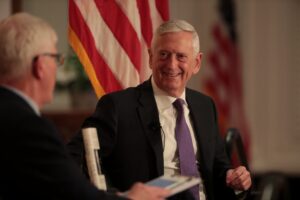
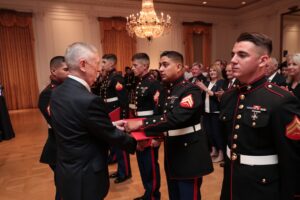
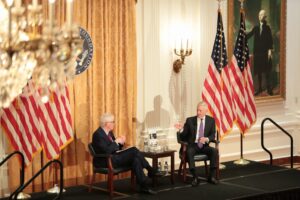
Audio:
Transcript:
HH: General, let’s begin. Call Sign Chaos – Colonel Has Another Outstanding Solution. I love that. Colonel Toolan gave that to you. Can you please explain what he was doing and where when you came up with that call sign?
JM: Well, like all good ideas, it came out of California. (laughing) It was the dry side. We were out in the Mojave Desert, and he was my operations officer then. And I had a lot of good ideas. We had 7,500 sailors and Marines out in the Mojave Desert with nothing to do. So I always came up with good ideas what we were going to do. And one day, I saw chaos written on his white board. So I stopped after delivering yet another good idea, and I said what’s chaos mean? And he said oh, you don’t want to know that. And I said oh, yeah, I do. So I prevailed since I outranked him. Actually, I waterboarded him, but it wasn’t cool enough, and it meant colonel has another outstanding suggestion here. It was very tongue-in-cheek from my irreverent troops, so I adopted it as my call sign from then on. Kind of keep reminding myself to be a little humble, but not all my troops thought I was as smart as I thought I was.
HH: It’s a great way to begin. I want to talk to you specifically about four of the passages in Call Sign Chaos that involve combat. You led the jump-off into the invasion of Iraq in 1991. You returned for the invasion of Iraq in 2003. In between, you led the invasion of the Marines into Afghanistan, and you led the first battle of Fallujah. So I would like to ask you an anecdote from each of those. The ambush at the quarry occurs because you had learned from Colonel Fulford, your direct report, the casualties were estimated to be 50%. You went home and couldn’t sleep that night and came back and told everyone that I want everything dead inside the U including the earthworms. And therefore, it was a devastating attack on the enemy position when you invaded Iraq. But you got a little overconfident. Would you talk about the ambush at the quarry, what you learned from it?
JM: Yeah, so we got through what was supposed to be a very difficult time. We rewrote the fire support plan, and it was very effective. We lost men wounded, we had vehicles knocked out. fortunately, no one killed. It was the last operation I brought everyone home alive from. But after a couple of days of fighting, it’s hard to describe how tired you get in that kind of fighting, especially with night vision goggles and other things. We had some, and not many in those days. But we were fighting night and day in the smoke, and I got tired. And we went across an open desert, we got squeezed by a quarried area. We looked at it, flew airplanes over it, nothing in it, and sure enough, we came around the side tight, not spread out like we could have been because of the terrain, and right then, the whole horizon lit up. And I was just dead tired. We went right underneath the power line. I should have recognized that would be the target reference point. And the whole horizon lit up, and at that moment, my logistics groups in the rear were ambushed by a bunch of mechanized vehicles coming out of the quarry. And so again, you know when your mortars are being set up to fire both north and south in the middle of an open desert, you’ve accomplished the impossible. You’ve gotten your troops surrounded in the middle of an open desert. Not a good time. As usual, when I got my troops in a jam, they got me out of it. But it was a tough time, but I learned, you know, you’d better be careful when you think that from the air, they can spot everything. We’d missed it. And at the same time, be alert when you get tired. Get back on, get your motivation going again. Don’t get sloppy, because you can walk, even in the open desert, your troops right into a problem. The real lesson I learned that day was we got called over to the regimental headquarters of Task Force Ripper, and Colonel Fulford had us all together, all the lieutenant colonels, and he said they’re killing the innocent people in Kuwait City. We’ve got to go still tonight. It was very dark. It was noontime, or shortly after noon, but the oil smoke was so bad, you had to use a flashlight to read a map even at noon. And so we all got our orders, and we turned to go back to our units and get ready to roll, and Colonel Fulford just called me over and said Jim, did you learn anything today? And I said yes, sir. He said good, and he turned around and walked off. He didn’t make a big deal of it. He knew I’d screwed up, but didn’t make a big deal of it. And that lesson stuck with me from then on that, how to deal with it when one of your troops, you know, runs into something like that, because once it’s happened to you, you don’t look at it quite the same again.
HH: Second instance is when you lead the Marines into Rhino, and it is the longest expeditionary jump, I believe, of the Marine Corps in their history. Can you tell people a little bit about how you came to command Task Force 58, and why it is such an extraordinary accomplishment for the Marine Corps?
JM: Well, I benefitted because some Marines back in the 1950s got KC-130 tanker aircraft into our inventory. Some other Marines in the 1970s brought in CH-53 Echo heavy lift helicopter with a refueling probe on it, so it could refuel. And then we got light armored vehicles into the Marine Corps, and of course, we changed our recruit training to make it much more rigorous in the 1990s. And I was the beneficiary of all this when after 9/11, I was a one star, and the fleet commander of 5th Fleet called me in, three star, Vice Admiral Willy Moore, and Willy’s a wild man. If it had been 150 years ago, he would have had a cutlass in one hand, an eye patch and a jolly roger at the masthead. And Willy said, you know, the Army special forces and the CIA are orchestrating the attack up north against the enemy at Mazar-i-Sharif. They’re going to lose. They’ll fall back on Kabul. The admiral had done his homework. He said Kabul hasn’t been held in 500 years. He said they’re going to fall back on Kandahar, their spiritual home. He said I need you to go after Kandahar. Can you get the Marines from the Mediterranean Fleet and the Pacific Fleet together and land 350 miles inland and you know, basically move against Kandahar? He put it a little more colorfully what I was to do to Kandahar. And I said yes, Admiral, I can do it, but I’ve got to go look at it. He said sure, you just go look at it, and tell me what orders I have to send, and we’ll do it. But he was an admiral who he could see the enemy, was focusing everything up north, and he wanted to put the enemy on the horns of a dilemma. He knew how he could do it with naval forces because of our ships and what they could do, and our Marines, and he wanted to extend that naval influence ashore. It was no problem. We could have gone 600 miles, to tell you the truth, ladies and gentlemen. It was just, that was the right place to go that we chose. And we went in, and first I went up and I circled around, and I’ll tell you now how to make four-star general. To you young soldiers and Marines, you take notes now, okay? You know, what you want to do is fight enemy generals dumber than a bucket of rocks, okay? And they’d left the back door open, and I could see no matter how brave their boys were, how many tanks they had, and they had a bunch of tanks and all this kind of stuff, it didn’t matter because their generals were dumb, and we were going to take them in the back, and there wasn’t anything much they could do about it. So we put together a team. We went in, and the admiral never gave me any more orders. He just left me alone to do whatever I thought was right, and we were able to go in and do it.
HH: Now what’s interesting about that, and I stopped, I have a very heavily-annotated copy of Call Sign Chaos, she became the first Marine in history to command. And when we say in the history of the United States Navy, that’s a lot of history. You were the first to command a navy ship. How did, how much static did your admiral get for that?
JM: Well, he wasn’t a man to worry about what other people thought of him, to tell you the truth. But there were seven ships at times. There was a Canadian ship, HMCS Halifax would be the destroyer that came in as we went near the coast each night. And the six U.S. Navy ships. Actually, I was the second, because there was a Marine lieutenant back in 1812, I think, who commanded a prize ship we’d taken from the British. But he got some heat on it, but he didn’t worry about it. It was a good team.
HH: You mentioned the lesson you learned because your Marines were not allowed to go and trap Osama bin Laden in Tora Bora. You faulted yourself for not communicating up. Would you explain that?
JM: Yeah, so we were on the ground, and we were joined as fast as we got there by allied troops, mostly from NATO – Canada, United Kingdom, Germany, Norway, Jordan, Turkey, Australia, New Zealand. They were with us immediately. I’d go out and say why are you here? You weren’t attack by these maniacs on 9/11. And they said because we share the same values. Very interesting lesson, very interesting lesson on leadership about the United States and how much people trusted us that they would come and fight alongside us knowing by doing so they were going to attract the hatred of the terrorists who had attacked us, something to remember when we think about NATO and the other countries that rallied to our side. And they’ve lost many, many of their guys doing it. We were, we took Kandahar airport. We took over the town, basically, and the Afghan people were overjoyed to see us. But Osama bin Laden, our intelligence people, had spotted, or at least had very good indications that he was in one of two valleys in a place called Tora Bora. So I’d studied the Jeronimo campaign down here along the border, the southwest border, in the late 1800s and the way the Army put in heliograph stations all along the border within sight of each other so if Jeronimo’s band tried to raid into the United States, they could be picked up. I had a computerized visibility diagram done. We picked out the mountaintops. I’m all focused on this. I know how we can block the routes out. And then we were going to move assault troops up the valleys and flush him out. He wouldn’t be able to stay there. What I’d failed to do, and the lesson I learned, Hugh, was I wasn’t keeping, I’d fallen under Army command and control at that point. The admiral, I still commanded the ships at sea under the Navy, but the troops ashore after a little while were put under Army command and control. And I had not spent time getting to know their general and explain to him what I was putting together. I just assumed, I assumed too much. And so basically, we didn’t get the orders to go, and Osama bin Laden got away. And as you all know, he was eventually hunted down by the U.S. intel community, and our SEALs killed him. But we might have had a chance to get him sooner. I considered it to be my failure to keep my seniors, my new chain of command, fully informed that we were ready to do it.
HH: There was a lot of frustration on your part very carefully explained in Call Sign Chaos. There’s another inexplicable halt on the march up to Baghdad.
JM: Yeah.
HH: And you describe it in detail. Would you tell the audience what that was and why it was so frustrating to you?
JM: Right. The attack into Iraq in 2003 was one where we assumed the enemy had chemical weapons. And we weren’t the only ones who assumed that. The United Nations assumed it, the Israelis assumed it, the Kuwaitis assumed it. There were a whole lot of intel communities that thought that he had those weapons. Why else would he be blocking the U.N. inspectors? So when we attacked, we were zipped up into chemical protection suits, very uncomfortable to fight in. They’re difficult to move in. You sweat a lot in them. It’s just tough, and we were stopped at this point as were attacking up a road that is on the direct downwind from Baghdad. In other words, we’d been told as we get close to the Tigris River approaches, that we would be hit by chemicals. There was a concern with supply lines. We did not have concerns in the Marines. Every Marine is trained as a rifleman so if the supply troops, we would bypass some enemy if they weren’t a big problem with our assault troops. And if the supply troops had to fight their way by them, that was their problem. They knew how to fight. I wasn’t worried about it. This wasn’t exactly a tough enemy. So we did not want to stop, because when you stop, the enemy can start getting brave and feeling like they can stop you. So it was very frustrating. I was within probably 24 hours of designating the 5th Regimental Combat team into the 5th Reconnaissance Combat team in going on a very strong reconnaissance for the Tigris River at that point. I was trying to come up with an artful way to keep going. But again, I think what we have to watch out for is in the age of electronics and digital communications, it’s easy to think that up above, you know what’s going on. Down below, the young sergeants and lieutenants, they knew we could keep going. It was no problem. The logistics troops back there, they knew they could fight their way by the enemy. But somehow, people got nervous up above and stopped us at the worst possible moment. And eventually, we got going again, but the enemy had had time to adjust, so it was difficult. It was more difficult than it otherwise would have been.
HH: So General, you did not write this. I want to emphasize this is not in Call Sign Chaos. But a lot of people did write that the delay at Tora Bora and the delay in the march up was because big Army did not want the Marines to accomplish those missions, that there was inter-service rivalry impacting the chain of command. Do you credit those allegations at all?
JM: Not in the least. I think there were very straightforward reasons why it happened, and I think that is just a bunch of baloney.
HH: All right, the next time you get stopped…
JM: Ladies, if you weren’t here, I’d describe it more artfully. (laughing)
HH: The next time you get stopped, you get started and you don’t want to get started on the first battle of Fallujah. You had advised a different set of tactics which I’d like you to explain. But then you began, and you quoted Napoleon. In fact, you made it an R rated quote, Napoleon famously said if you’re going to take Vienna, take Vienna. In the book, it describes the fact you’ve got an R-rated version of that. What happened in the first battle of Fallujah?
JM: You know, ladies and gentlemen, we were in, we went into Anbar Province. It’s the Sunni Triangle. You’ve heard the names of Fallujah, Ramadi and the others. They were very, it was the most difficult area in terms of the embedded insurgency. We were relieving the 82nd Airborne Division. They’d briefed us very well about what was coming up. There was a very good turnover. But within a couple weeks, four contractors wandered into Fallujah without checking in with the Marines in the area. They were killed, burned, bodies strung up, desecrated. And we knew that the city had tribal elements. We had spies in the city. And so what I suggested was don’t get angry. Great nations don’t get angry. I’ll get the bodies back, and get them back to their loved ones. And we’ll hunt down, we’ve got the photos, and we’ve got people who tell us who did it. We’ll hunt them down, and we’ll kill them, one by one. We’ll get them. Out of Washington came orders despite what my senior Lieutenant General Conway wanted to do, which was support me with this much more measured, targeted approach. General Sanchez in Baghdad, the Army general who commanded the overall effort was in agreement. General Abizaid, the Centcom commander was, but we were told for other reasons, we had to make a demonstration here. And so we had to evacuate hundreds of thousands of people. Of course, that meant the enemy could be in amongst the moving stuff in and out and that sort of thing. And I only had two assault battalions to throw against the city. So it was going to be a heck of a fight, because there were more enemy in the city than we had troops to put against it initially. And I said okay, after four days when they ordered me to do it, I’ll do it, but don’t stop me. And of course, deep inside the city again, we were stopped, and eventually told to withdraw. But what was really important, I remember a young light machine gunner, he’s a kid from down south, blond-haired kid, filthy dirty with his machine gun over his shoulder as the Marines were pulling back, and a camera got put in his face, and he is asked isn’t this terrible, you know, it’s terrible you lost your buddies, isn’t it terrible you have to pull back, don’t you feel terrible and going on and on? And the young kid doesn’t talk real fast, just turns around and looks in the camera, and says it doesn’t matter. We’ll hunt them down somewhere else and kill them. But what he was really talking about there was he was not losing faith in the chain of command as we’d been ordered in and then we’d had to go through this hiatus where we weren’t attacking, they were attacking us, but little pin pricks. And then we had to pull back. You know, you can imagine how tough that was on the spirits of the young troops. But they didn’t lose faith. They didn’t lose confidence. That’s when loyalty really counts. Loyalty really counts when there’s a hundred reasons to dredge up to say I’m not going to be loyal today. They didn’t suck their thumb. They didn’t go cynical and start saying you know, cowardly things or go start talking about being a victim or anything like that. They just said we’ll hunt them down somewhere else. And they came out, and that’s exactly what they did.
HH: You know, somewhere in the book you write morale is evidenced by a lack of self-pity. There was no self-pity in the Marines called to withdraw.
JM: No, I mean, too often, I think we see a response, difficult circumstances at times, of either cynicism, you know, well, there’s nothing you can do about it, or it’s just victimhood. I’m a victim. Know that you’re always making choices. And one thing you can always choose is how you’re going to react, and that’s what that young lance corporal did that day. He chose not to react by sucking his thumb, and that’s the kind of people that we send after the enemy these days. I mean, those maniacs who attacked us on 9/11, they really thought they could scare us by hurting us. And this country doesn’t scare, and that’s one thing that always humbled me among the troops, that when those sergeants or lieutenants pointed to a young troop and pointed toward the enemy, they’d be up and going after them. So we’re really, really lucky. Those of us who who got to serve there, people thank me for my service. I mean, I don’t, I mean, the country’s worth it, you know? I was humbled always to be around those guys. And no victimhood, no cynicism. Those are just signs of cowardice.
HH: General, in the decisions that are most memorable for being bad in the Iraq war, one is the decision to disband the Iraqi Army. And the other is the decision to stop the first battle of Fallujah, both taken by civilian authorities. Is it, in your opinion, better when you have an occupying force to have a warrior in charge? It worked for MacArthur. It worked for Eisenhower. It didn’t work for Lord Mountbatten who was a warrior, but when India separated from Pakistan, a million people were done. If there had been a warrior in charge of the occupation, would it have gone better?
JM: I think what you have to look at is when you’re in charge of anything, I don’t care if you’re running a business, a small business, or you’re running a football team, or you’re running a military operation, the most important thing is make very clear what is your intent. And your intent is what is your aim. What are you trying to do? And make it so clear that there can be no doubt about it. In other words, you’re identifying the problem you’re trying to solve, and then put in just vaguely what method you’re going to use. I want you to use multiple avenues, because this is very channelized terrain. I don’t want to have everybody lined up one behind another so if they block us at one point, they stop us. You see what I mean? And then put down the end state. And the end state is where it went wrong. And it doesn’t matter who’s in charge if you don’t get the end state right. And if we don’t get the end state right, then you’re in an inconclusive war that just grinds on and on. You don’t have people focused. If you get it right, and we got it right tactically, we got it right operationally, you saw how fast the statue in Baghdad came down, you saw what happened there, but strategically, we missed the mark. And that can have calamity written all over it if you don’t get that part right. And that’s where we fail, and that’s where we’ve got to get better at it. And that means we’ve got to have people who study history and are informed, but can still think like an 18 year old sailor, soldier, Marine down at the very bottom whose got to make it happen and make it so clear they know what they’re doing.
HH: Was the civil war in Iraq inevitable?
JM: Well, when you take the person off, the oppressor off the top that’s oppressing and keeping those people down, history will tell you those passions will come out. We probably, looking back, did not have the number of troops we needed that could have kept control of the situation. And the terrorists were out to foment the war. So it wasn’t like we had a level playing field. We had people who were going to take advantage of 500 year old hatreds between people, and light a fuse to it. We eventually were able to get it under control. And then with a precipitous withdrawal, we lost that control. But I think if we’d had more troops, we probably could have at least made it so it never reached the crescendo it got to.
HH: A moment ago, I mentioned Lord Mountbatten. He served alongside a name I did not know until I read Call Sign Chaos, Field Marshal Slim. You quote him a lot, and I’m going to turn to your reading advice now. But would you first tell people about Field Marshal Slim and what kind of impact he had on you?
JM: Yeah, Slim was a British general early in World War II, so he got promoted and sent to a place called the China-Burma-India theater, and many people refer to it as the Forgotten Theater after the war, because they never had enough troops, enough ships, enough airplanes. He always got second-rate troops sent to him, this sort of thing. And what his book is called Defeat Into Victory, I think is the title of it. But basically, again, a man who simply dealt with the cards that were dealt him. He moved against the Japanese. He was able to bring his troops together, and they were from a dozen different countries. It was like today a combined task force sort of thing. But he was a guy who could always create options. He never said there’s nothing I can do, I’ve just got to sit here and keep doing the same thing as before. He was always looking for different ways to fight them, and eventually was able to take what was a very resounding defeat for the Allies in World War II early in the war, turning it into a victory. He had a very close bond with his troops.
HH: In Call Sign Chaos, there’s a list of 62 books at the back that General Mattis recommends. I’m a pretty good reader. I’ve read less than a third of them, and so I’m humbled by this. But I was encouraged by your admonition to every reader not to read as idiotic, and more importantly, it is unethical. Would you unpack that, especially for the young men and women in uniform why it is unethical not to read?
JM: Yeah, well, when I joined the Marines, I found that they were very, very disciplined, and very unregimented in their thinking. The surest way to be laughed out of an operations brief was to say something wasn’t doctrinal. If that was your only reason not to do it, that you literally, your subordinates wouldn’t even tolerate it. They’d hear you, and they’d immediately start firing questions at you. In other words, doctrine was not a straight jacket. You should follow doctrine. It’s written in blood. It’s things we’ve learned the hard way. But do not allow that to become a straight jacket where all you can think is whatever is in the book. What they require you to do each time you get promoted, like when you go from private first class to lance corporal up to corporal, you get a list of books you’ve got to read. All Marines when they come in have to read some, lieutenants and privates. Then, you know, you finally make staff sergeant or you make captain, here’s a new list of books. It goes on. Even generals. You make general, you’re pretty proud of yourself, come home, look in the mirror, see little stars up there, and somebody reaches through the door and says here’s your new list of books there, smart guy. So you go back to reading again. But when you’re in a position in the military where, when you write an order to say here’s what we’re going to do, you have got to know what you’re doing, because people are going to put their lives on the line. And this stuck with me, Hugh, all the way through secretary of Defense. In fact, as Secretary of Defense, there wasn’t a list of books, so I gave myself a list of books to read at that level. But I wrote out a question for myself at my stand-up desk where about twice a week, I would sign all the deployment orders. Remember, civilian control of our military means we neve deploy one troop overseas unless a civilian signs the order, not one troop, not one airplane, not one ship. So a couple times a week, you’re, of course with worldwide ops, you’re signing these. I wrote out a question to myself that says will this deployment of these troops contribute sufficiently to the well-being of the American people to justify them dying? Not justify them being in harm’s way or justify them possible getting injured or killed, but dying. And I hope that as I looked at the orders that came through, all those books I read had prepared me to answer those questions affirmatively.
HH: You said, and this is a hard thing to say, if you have not read hundreds of books, you are functionally illiterate. You really mean that, because that puts a huge burden on all these young men and women out there, hundreds of books.
JM: Well, I’ll give you 40 years of service to get them done, so no problem.
HH: Okay (laughing)
JM: Just take it one bite at a time.
HH: All right. I want to talk about surprise. And it’s, you were surprised a few times in this book by what happened. You didn’t mention the Yom Kippur war much. It’s occasionally mentioned there. It’s Nixon’s most important moment at the Nixon Library. He saves Israel. But Israel was strategically and tactically surprised, a country that is known for overwatch. Is surprise still possible in this era with eyes everywhere watching everything?
JM: Oh, absolutely surprise is possible. Let me give you an example – 9/11. I’ll give you another example. How many of you knew that Sunday when you saw President Obama come on TV one night and say we killed Osama bin Laden, that operation had been months in planning, preparation, ships positioned, troops moved around, spies doing things. I think we were successful in keeping that secret as hundreds of us knew about it. As a matter of act, the night before as the ships were turning to go into position, as the troops were being deployed to the advanced bases to be ready to go into Pakistan, that night was the night of the White House Correspondents Dinner. And you’re sitting in Washington, D.C. with 800 correspondents all sitting there, and we’re all wearing our fancy clothes and everything, and people are in there having a good time. And here we were, we were probably no more than about four of us in that room, you kind of expected to show up and be nice to one another. And there was probably four of us in that room that knew everything that was going on, and not one of those correspondents knew a thing about it. That’s not, that’s not irresponsible. That’s not us not, you know, keeping the press informed. We owe confidentiality on military operations. That’s the way you protect this country, and we’re able to do it. So yeah, we can do it. There’s a lot of other things going on, too. I’ll just sit up here and smile about, okay, but it’s helping you to sleep safely at night.
HH: I’m not a fan of long questions. This is my longest question, General. I made a list during reading Call Sign Chaos of the information war episodes in it. Wikileaks did not involve sending a bullet from any gun, but it killed a lot of Americans. The enemy propaganda machine inside of Fallujah definitely impacted that battle, in your view. The pictures from Abu Ghraib was a decisive strategic defeat for America in the world. We also did not publicize the Iranian plot to blow up Café Milano, which you write about at length. Those are four episodes in the information war where we were beaten. Do we have, do we think enough time? You said if you’re a strategist, your head should hurt from thinking about it. Do we think enough about the information war?
JM: Well, again, ladies and gentlemen, what Hugh you’re talking about, too, is where we could have done better, where decisions were made on priorities, frankly, like on the Iranian case. And I think the important thing is if you read enough history and you live in the history of the moment, you realize what options they had and what they did about it, it leads you to ask questions. And it will not show you the way, but it will lead you to ask the right questions. And in each of these cases, had we asked the right question, we would not have been in that position except for Abu Ghraib. In Abu Ghraib, that what happened at the prison was a violation of trust. It was a commander who did not have the force of personality or the internal experience to know how you deal with a situation that was as difficult as she was dealing with. And I think it just, that one is just when the system breaks down, our personnel system breaks down. But once in a while, that happens. And that’s when NCOs should step forward, junior officers, and make, and strengthen it. In the rest of them, it was history that we hadn’t asked, caused us not to ask the right questions. If they had been more historically informed, I think they would have asked them.
HH: On this stage, Secretary, I had Secretary Rumsfeld. You’re the second SecDef that I’ve gotten to talk to on this stage about did he see the impact of social media coming on 9/11. And he said no, I didn’t have the time. I was fighting a war. Did you during your tenure in the Marines spend time wondering about the impact of these new instruments of information warfare?
JM: We spend a lot of time on it. We have to be careful having the military starting to take over this aspect of warfare, but we’ve got to be engaged in it. For example, we track social media. We use it a lot in our intelligence collection. We use social media as we try to defuse lies put out about America. We have young guys and gals, many of them, by the way, are from immigrant families, because they know the culture. They know the language, and they know how to go back and really stand up for us and fight it out in the information space. But I think, too, that we have to look at in the long run, we are probably culturally more capable than anyone because of freedom in order to fight, that would allow us to fight in the information space. We just have to choose to do it, and we must organize to do it, because if we don’t organize, if you have bad processes for information warfare, the same thing happens everywhere. You mix bad processes with good people, the bad processes dominate nine out of ten times. They suffocate initiative. Processes are complex, especially when it’s a free country. It does not want to be using lies like our enemy is. So you’ve got to stay true to your values, but you shouldn’t commit suicide and not do anything, not fight in the information space. You’ve got to fight.
HH: Justice Gorsuch sat in your chair on Wednesday night, two nights ago, to preach the values of civility and of learning civics. I don’t see a lot of civility in the media. I don’t see a lot of civility in social media in the exchanges between even members of families and friends. What’s your assessment of the danger of the decline of civility and the ignorance of civics?
JM: In 1858, Abraham Lincoln wasn’t president, yet. He was addressing the young men’s lyceum in Illinois. And I was reading it, just because I like reading old stuff, because I get new ideas. And in it, he says that even all the army, combined armies, I’m paraphrasing now, of Europe and Asia and Africa, even if they had a Bonaparte, Napoleon having just died, military genius a few decades before, all combined, they could not cross the Atlantic and cross the Blue Ridge Mountains and take a mouthful of water out of the Ohio River, because free men and women just wouldn’t let them. It wouldn’t happen. He said if this is to die, this experiment that you and I call America, it’s going to die by suicide. Very interesting, 1858, and he’s already recognized that if we go tribal, if we start attacking one another, that is how we die. So I think what’s happened, though, Hugh, is we are now in, if we were running against each other for office, I’d say I’m smart, you’re not as smart. And you’d say you’re right, and I’m wrong. And sometimes, it’s not even civil, and I’m okay with that in an election, because you’re trying to divide people and say vote for me, I want to get in office, I think I have a better idea. And I understand. It’s not always civil, but welcome to democracy, raucous. It happens. I’m okay. But once you start governing, then you’ve got to unite. You cannot divide and govern. You have to unite to govern. The right wing Senator Vandenberg from Michigan in the late 1940s was asked why would you ever work with that terrible Democrat President Truman about, and it was about a Defense issue? And he said because politics stops at the water’s edge. You’ve got to work together. You know, he, too, saw what Abraham Lincoln saw. We’re going to have to come back together with a fundamental friendliness. We can be hard on the issues. We can yell at each other and hammer the table and everything else about the issue. But then let’s go out to dinner after that, or go get an adult beverage somewhere, and find out how you’re doing on getting your daughter into college. How’s your son doing in his football game? How’s his team doing? Let’s get back to understanding each other and not classifying people as enemies of the state or something else just because they’ve got a different idea about America. And if we don’t get back to that, Abraham Lincoln’s concern, I think, is going to manifest.
HH: Now General, you deal with two professions in the book – journalists and lawyers. I’m both. They don’t come off so well in the book. (laughing) But you are, not all journalists are as good as Bing West. You are helped along in this book by Bing West. He’s an amazing writer. But you’re very kind to journalists. You say that you just expect from them the ethics that you expect from your men. I’m here as a representative of the 5th estate to tell you that that’s not going to happen. It’s not an ethical group of people. The craft has been declined. You even brought up the dismissal of Stanley McChrystal, and I read with some interest that you didn’t fault the president for relieving him, because his officers hadn’t acted right. But it was Rolling Stone that screwed him. It was a reporter who broke the rules…
JM: Yeah.
HH: …of engagement. So how do you trust a media that wants a story more than they want to live ethically?
JM: Well, the media is a pretty amorphous thing. It’s hard to put, you know, is a social, one of these guys on social media a reporter or not? Is Rolling Stone part of the respected press? Here’s my point about the press. They’re not always right. They’re not always fair or accurate. But they don’t have to be right or accurate to do most of their duty to the country, to keep people in power on their toes, to open windows into things. Now we have to be wise enough to know when they don’t get it right, don’t overreact to it and immediately embrace it and say a-ha, this is why I hate my neighbor, because look what this guy just wrote. You know, we’ve got to be critical. But we were always very proud, for example, for the last couple of years in the Pentagon, because we thought we had the best press corps in Washington, D.C. And they knew what they were talking about, they knew the issues, they had long-term, they had people there assigned to the Pentagon for five, ten, fifteen years. These were not sophomores when they came in and asked me questions. I got a lot of good ideas from them, frankly. So remember, the press to carry out their Constitutionally-privileged duty to our country, they don’t have to be right, and they don’t have to be fair. Now a lot of people get angry at them because they’re not right or fair. You know, I’ll give you an example. Barbara Starr ran something on me, and she was actually fair. She took nine seconds out of a 90 minute speech at one point where I’d glanced across the room in San Diego to some Marines who were getting ready to deploy had come down to hear me talk. I was a three-star. And I said sometimes, it’s just fun to shoot people, okay? And I was saying it, because I know the enemy reads our press. And I knew that those young men, many of whom had just come back from deployment were going right back in within weeks because we were having to rotate quickly. Well, it made the news, and I wouldn’t have used that, those words had I known the press was in the room. I’d been told there were no TVs. So a couple months later, you know, it got all over, you know, the news, and people wanted me fired, and the Commandant had to chew me out and everything, no big deal. Like every time I’d gotten in trouble, the Marine Corps promoted me, you know? (laughing) So anyone who says the Marines Corps is a no mistakes or risk averse, tell them to quit sucking their thumb, get out there and do whatever you want, do the right thing, don’t be, you know, dumb about it. As long as you’re not making mistakes for your own self-interest, they’ll promote you. So a couple of weeks later, I’m in the Pentagon, and I’m walking down, and there’s Barbara Starr, who had me on CNN every 15 minutes, you know? And I said Barbara, you know, what’s going on? She said oh, General Mattis, don’t beat me up. I said I’m not, Barbara. You’re just putting food on the plate for your family. But God, I mean, every 15 minutes? I’m a bachelor. I thought maybe we had something going, you know? Now you don’t write, you don’t send flowers, you know? (laughing) And she said, well, General Mattis, she said you know, a lot of people were upset with what you said. And she said even in this building, the Pentagon. And I said well, no kidding. There’s toy soldiers in this building who wouldn’t know a line of departure if they tripped over one, you know? (laughing) But my point is, she’s not some ogre. She’s a friend of mine to this day. I respect her to this day. Let’s not allow the press when they’re doing their Constitutional duty, the people who wrote that Constitution were smart. They knew they would screw it up once in a while. And they’re willing to have them screw it up a lot if necessary so that never does this look like China or Russia. You know what I mean? So we should be proud every time we get angry at what they write and say that’s my country, by golly. That darn fool can write anything, you know? (laughing) But don’t (applause)…
HH: From my point of view, that is correct, absolutely. There is a down side for the military, though. General Petraeus came on my show once.
JM: Yeah.
HH: It became a controversy. It ended up General Betray-us in the New York Times. General Abizaid came on once. It became a controversy. I have, this is the first time I’ve ever interviewed you. You’re harder to track than anyone in the woods to get down to do an interview. I think the military has become risk averse primarily about the media, thus just not using a weapon that they could use with communication. How do you change that culture in the military, because communication is everything with civilians?
JM: Well, I think that’s a fair assessment. But I think, too, that we live in a time when the corrosive political discourse right now means that anything you say can be basically taken in the opposite way you meant. In other words, you could actually be eroding support for the military. What is the highest-rated institution in our country in the Pew polls year after year? It’s the military. Why? Because it stays out of politics. It studiously stays out. I was condemned for not getting more political at times. But my predecessor under President Obama, he, too, refused to make political statements. Secretary Carter refused to do it. So I think what we have to do, I mean, I thought at times if I said six, and the President said a half a dozen, I’d immediately be attacked in the media. A-ha, tension between the Pentagon and the White House, you know? (laughing) So we get gun shy of going out there, and I think that’s a fair statement. But we’re also in a particularly corrosive time in our country where we’re hurting people’s reputations instead of being hard on the issues, or hard on each other. And I think we have to reverse that. Be hard on the issues. There’s no hard to be hard on each other.
HH: President Nixon had a rule that he would only do interviews in his retirement if they were broadcast live and from end to end. He’d give you an hour, you sat down with him for an hour, you had to broadcast an hour. Is that good advice for the military to insist on rules of engagement with the press that makes sure everything they said is in context?
JM: Yeah, it would be helpful, but I’ve been surprised how things I’ve said were taken out of context, or things I never said were alluded to or attributed to me. So I think it’s mostly right now, you’ve got to engage. You can’t expect perfection. But don’t get all bent out of shape about it. So when you read, Hugh, we’re working together on something and I read Hugh Hewitt says Mattis is a dummy, first of all, call you and say did you say it? Don’t accept it. And then go out and we have a good argument about it if you said it, you know, that sort of thing. But I would say that it’s going to take a lot more humanity, and a lot less reactiveness to what you see in the press if you’re going to allow for more engagement like that.
HH: Now let’s go back to your career. You took over Central Command, one of the combatant commands, probably the busiest one over the last 20 years since we’ve been at war. You had great combatant commanders in Afghanistan and Iraq you didn’t have to worry about that much. But you said you filled your rucksack with options for Iran. Why?
JM: Well, Iran was clearly going into dangerous territory. Iran, there were five threats. One was the nuclear weapons program, which they had used denial and deceit to say they weren’t doing it. We knew they were working on it. Then of course, there’s a maritime threat, the ballistic missile threat, the cyber threat, and the big one was the terrorism. And what they were doing was destabilizing across the entire region the governments out there that so much depended on if we were going to try to make progress toward a more peaceful region, a more prosperous region. Eventually, they even tried to kill an ambassador less than two miles from the White House. And but for one fundamental mistake, they probably would have pulled it off by a car bomb or a truck bomb in crowded Georgetown outside a restaurant. We would be having a very different conversation about Iran right now if they’d pulled that off. So my concern was that we were not dealing with Iran in a way that would temper what was going on. And remember, our problem is not with the Iranian people. You need to keep that foremost in your mind. It is with the regime that persecutes its own people, that does not look out for their best interest. And don’t allow a dislike of this autocratic, this theocratic dictatorship, really, is what it is, don’t allow that to permeate your thinking about the Iranian people. They’re altogether different from these guys, these jerks in charge, and what they’re doing in Bahrain right now tonight, in Syria to keep Assad in power, a murderer, what they’re doing down in Yemen to keep, probably fuel a war that’s creating the worst, not probably, they are fueling a war that’s creating the worst humanitarian situation in the world right now is in Yemen. This is all going on with a state sponsor of terrorism at this point. And they need to be collared, and they need to be brought down to heel, because they are going to really screw something up one of these days. They’re going to turn off all the lights with their cyber attacks in Paris or New York, or they’re going to put mines out there and run the price of oil up double what it is now, something like this. So I think it’s much better we deal with these things at an immediate level rather than letting them fester. I’ll given you an example. Winston Churchill was asked during World War II what to call that war. Remember they were calling World War I the great war in those days. And World War II was just the war that was going on. He immediately responded to the newsman who asked him, it’s the unnecessary war. Now think about that. Tens of millions, 50-60, we don’t even know how many tens of millions dies in that war, everything that came out of that, the unnecessary war. He said if the democracies had gotten together and worked issues like Hitler and Mussolini in the 30s when they were so weak, they’d never had to go to a war. It did not have to go that way. And so let’s just make sure we do what we can to prevent war now, and we don’t follow the bad lessons of history.
HH: One of the books you reference in your appendix is The Peace To End All Wars: The History Of The Middle East After World War I when Churchill and all the Arab specialists came in from England, and they drew lines on a map and it was supposed to settle things forever. Do you think that peace in that region is actually possible given the historic confrontation of Persia with the Arab regimes, and now with the introduction of Israel into the land?
JM: I’m a glass half full kind of guy, Hugh. I think peace is possible. We’re going to have to have international help to do it, I think, is the point you draw from what you just described. It’s going to take other nations rewarding the right kind of behavior. There are good people out there, strategic thinkers out there. The king of Jordan is a classic example. Mohammed bin Zayed, the Crown Prince of United Arab Emirates, all United Arab Emirates and the U.S. military, little Sparta, because every time we get into a jam, the Emirates are with us. Their troops are fighting right alongside with us, for example, tonight in Afghanistan. So there are people out there that we can build out from, but it’s going to take international, it’s going to take a coalition of nations that are not adding fuel to the fire in order to stop Iran from what they’re doing, to give them the tools on counterterrorism that are going to be needed.
HH: You write in one line I won’t forget, history is compelling. Nations with allies thrive, nations without allies wither. Does Israel have real allies in the region aside us?
JM: Israel has nations in the region, Arab nations in the region, with common interests and common perspectives, yes.
HH: All right. That’s well put. Let me ask you about General Soleimani. Not many people know his name. Sometimes, people surprisingly don’t know his name. What do you make of him as a tactician and a strategist?
JM: Soleimani is crafty, murderous, and willing to do anything to kill Jews and destabilize the region, promote anti-Americanism. He’s very committed.
HH: You studied the six Iraqi generals that you had to jump off at in 2003. Is Soleimani better than the average general, much better than the average general, or just another general?
JM: What Hugh’s referring to, before we went into the attack into Iraq, there were six Iraqi army divisions in the area that my Marine division would fight, and I had first lieutenants or some captains, each of them were assigned one of those generals to tell me all about them so I knew where they’d gone to school, how many kids they had, where their families lived, in other words, were they subject to Saddam Hussein killing or torturing them if they didn’t do what they were told, things like that. So I know those six well. I obviously studied Soleimani. Soleimani is better than any of them.
HH: Well noted. We’re running low on time, so I have to skip on my outline. You talked about the danger of the aura of omniscience existing in the civilian leadership of the Pentagon. Would you explain what that is and how do we combat that danger? Omniscience. Everybody at 1600 knows what’s going on.
JM: Ah, so it goes back to the earlier point, I think, Hugh, about what we have today with this instant communication. You can start feeling like you really know better than the guys and gals out there in the field. You can start thinking you know everything that they’re doing. You don’t realize that there’s going to be opportunities that they spot if they, excuse me, if they know what you want done, they can take advantage of. You can start thinking that you’re omniscient. You really know it all. And it’s much better to have good feedback loops and displays of data so that you know what’s happening on the front lines. And make sure you stay in your own area. Like if your job is strategy, don’t go down and start telling people how to fight in the city. Stay up on strategy. If you don’t like the guys who are fighting in the city, change the commander. Get him out if you don’t trust him, don’t have confidence in him. But don’t start muddying the waters, because when you stop looking at what you’re doing to do someone else’s job, guess what’s falling apart? The important stuff up here. That omniscience can be very, very corrosive to accuracy.
HH: There are a lot of Metternich’s on MSNBC, my network. They’re not really Metternich’s, but they talk like they are. What is your opinion, they’re not even chateau generals, which you refer to. They’re civilians like me who have never been close to hearing a shot fired in anger. What do you think when they opine on this?
JM: Well, you know, first of all, I admire anyone who’s at least interested enough to study it a little bit. I hope they study it. But at the same time, you’ve got to be careful who you listen to. Most of us would not go to a carpenter if we needed brain surgery. You know, it’s just, I mean, they may have a Black and Decker variable speed drill, but you really don’t that, you know? (laughing) I think what you want to do is just make sure that you have people who have more than a gravelly voice speaking authoritatively giving advice. And that’s up to the networks again. But eventually, the networks will, they get some pretty good people on there, too, I’ve noticed, you know, often. Once in a while, they get some ones who don’t know a thing, don’t have a clue what they’re doing, but you know, even dumb people need employment sometimes. (laughing)
HH: We have a lot of that. Let me ask you about the impact of erasing the red line. You write about it in the book.
JM: Yeah.
HH: It has long-term consequences which I think every American president going forward should study. What happens when we threaten to do something and we don’t do it?
JM: Well, when you’re handed your rifle as I was in 1969 in the Marine Corps, had a corporal say something to me that a lot of other Marines have heard. And he said this is the only reason you exist from now on is this rifle. Don’t ever point it at anyone unless you intend to pull the trigger. No screwing around with this thing. I think when you set a red line and you don’t live up to it, then the moral authority is eroded. And I’ll give you a classic example. After the red line that was drawn by a previous administration about chemical weapons in Syria, and we didn’t hit them for the use of chemical weapons that year, I got a phone call from a foreign diplomat, retired diplomat, who I’d been when I was a second lieutenant, I’d gotten to know him. He was a second lieutenant in his army out in the Western Pacific. And we know each other very well, so it’s a very familiar sort of communication. And I saw his number come up on my personal cell phone, so I grabbed it, and he said well, Jim, it looks like we’re on our own with China 36 hours after we failed to carry out our red line in Syria. In the Pacific, a guy that served in their military as a young officer, joined the diplomatic corps, had served as ambassador in two different countries, a very seasoned diplomat, good man, and that’s the lesson he drew from us not carrying out the red line that we drew against the chemical weapons convention violations.
HH: General, I want to end with three lessons applicable to military and civilian from your book, Call Sign Chaos. What do I know? Who needs to know it? Have I told them? And I think I read that 20 times in the book. What does that mean to this audience?
JM: Well, the bottom line is somewhere, for example, when I commanded a 23,000 man division, somewhere in that division was everything I needed to know. Do you have ways of getting from the young, youngest sailors and Marines in the division up to you what you need to know? Not everything, just what you need to know. The only way to do that is to create an atmosphere where everybody feels like they own the mission. You give them very clear guidance, and you take your hands off the steering wheel. You circulate around, and you watch them, you coach them, you coach them, and you coach them. But they have to be thinking all the time what do I know, who needs to know, have I told them, because when they see the opportunity, they need to fire that up to you so you can turn a whole lot of support from them. You may say this is what we’re doing over here, and all of a sudden, they see the opportunity here. And you’re going to shift everything. I’ll give you an example. We had an Army JSTARS downlink station in my headquarters in the Marine Division. And we had a real problem going through the land between the two rivers – Tigris and Euphrates. That was the area given to my division to attack on Baghdad to keep the 3rd Infantry Division on the left, the U.S. Army division moving. And we couldn’t find a place, a road to go. And one night, we were sitting there, and the JSTARS private in the Army, he’d had a rather colorful time, his sergeant told me in his career to date, private in the Army was watching the screen. He said you know, there might be another route over here, because this guy’s going really fast up this unfinished roadway. So we all walk over and look at it in the tent. I said how fast is he going? And he puts his cursor on him, and he puts it on him again a little bit later, and he said 68 kilometers an hour. And immediately, every colonel’s head and the CP turned toward me looking, and I said swing 15,000 Marines up that roadway. Now 23,000 Marines in division, 15,000 switched right there because one young man overhearing what was going on said you might want to look at something here. So that’s how you make decisions in the real world. It’s not done the way it’s done on TV, you know, where you have all these old people sitting around and hammering the table and stuff. It’s some young man with a rather colorful first tour in the Army spotting something like that.
HH: Okay, applicable to every single person in this room, you write everyone needs a mentor or to be a mentor. Why, and how important is it in the military vis-à-vis the civilian?
JM: I’d only add that nobody needs a tyrant in the midst of that. You know, I learned a lot from my mentors. Let me give you three. A second lieutenant in the infantry, he got 40 sailors and Marines, and my first platoon sergeant, he was right after Vietnam. We didn’t have enough senior NCOs to go around, what we call E-6s and above. And so my first platoon sergeant, instead of being a staff sergeant, E-6, was Corporal Wayne Johnson, a British East Indies immigrant to America. Of course, with a name like that, we immediately christened him John Wayne, and we were on our way. (laughing) And what he taught him, this 22 year old corporal, was what a lieutenant should be interested in and doing, and even better, what a lieutenant should never hear, even if he hears it. Just leave these things to NCOs. 22 years old corporal filling a job that should have been filled by a 27, 30 year old staff sergeant. My next platoon sergeant was Corporal Manuel Rivera, immigrant from Mexico. And Corporal Rivera was as authoritarian as you could imagine, yet he had a way because he was so physically strong, of just helping Marines anytime on a march or in a difficult thing. They just naturally gravitated to him. And I saw the power of the force of personality. He never raised his voice. He didn’t have to. Finally, I got a staff sergeant, Remy LeBrun, yup, French Canadian right out of Quebec, had a funny accent and everything. Now he would show how he could use a sense of humor with the troops on the worst day to keep them going, and I saw what, not just trust and respect, but what affection did to a unit. And I learned a lot. Those were my first three real mentors in the Marine Corps. Not one of them outranked me. They were all juniors. Mentors come in all shapes and sizes, but we all need mental models for what works. And then we adopt things. We don’t become them. We’ve got to do it in our own unique way. But another thing is we don’t need tyrants. You know, that’s not a way to run any organization, or abusiveness. I got over enjoined public humiliation by second grade, you know? So what you want to do is bring out the best in people, and that’s what I wrote the book for, frankly.
HH: And it succeeds. I can’t emphasize enough I think it’s an instant classic. Let me close with an out of the box question. You’re a student of military history. The great commanders are Alexander, Caesar and Napoleon. If they looked at your United States Marine Corps, what would they see? Obviously, air power would be new, and artillery, but what would they see? Not artillery, that is the same of the wars that they fought, and what would they marvel at in the Marine Corps?
JM: Well, what they’d find is the same is that for those who go into the close quarters, the intimate fighting, it’s the spirit that matters more than the weapons or the equipment what they’re wearing. It’s the fighting spirit, and in that regard, they would stand in awe of the U.S. Marine Corps.
HH: Ladies and gentlemen, please join me in thanking General Mattis. (applause)
End of interview.
 @HughHewitt
 Facebook
 YouTube
 Instagram